Research
Our goal is to identify the cognitive and neural processes underlying functions that are critical to human learning and development: reasoning and thinking about numbers.
We combine behavioral assessments with brain imaging, including functional magnetic resonance imaging (fMRI) and electroencephalography (EEG). Below are some of the questions we work on.
How do children learn arithmetic?
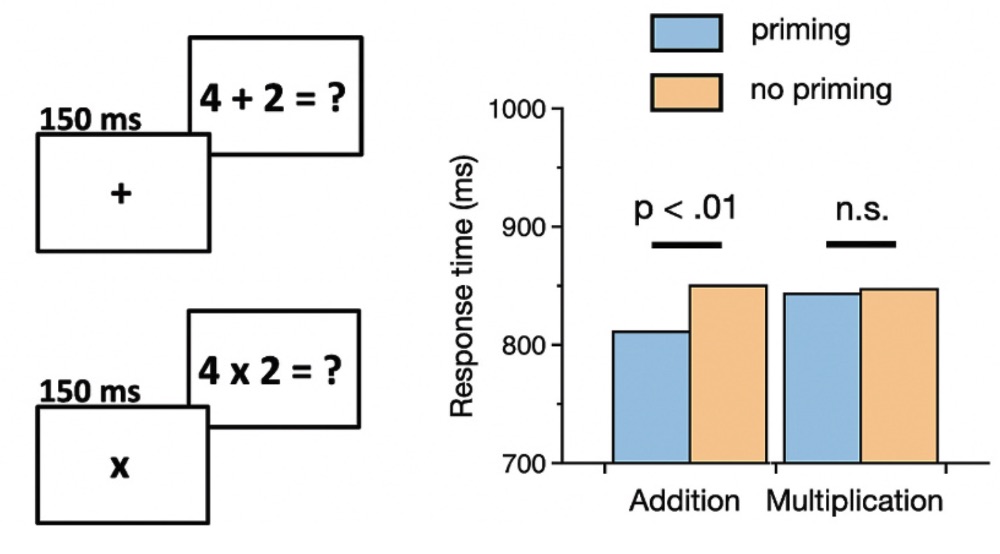
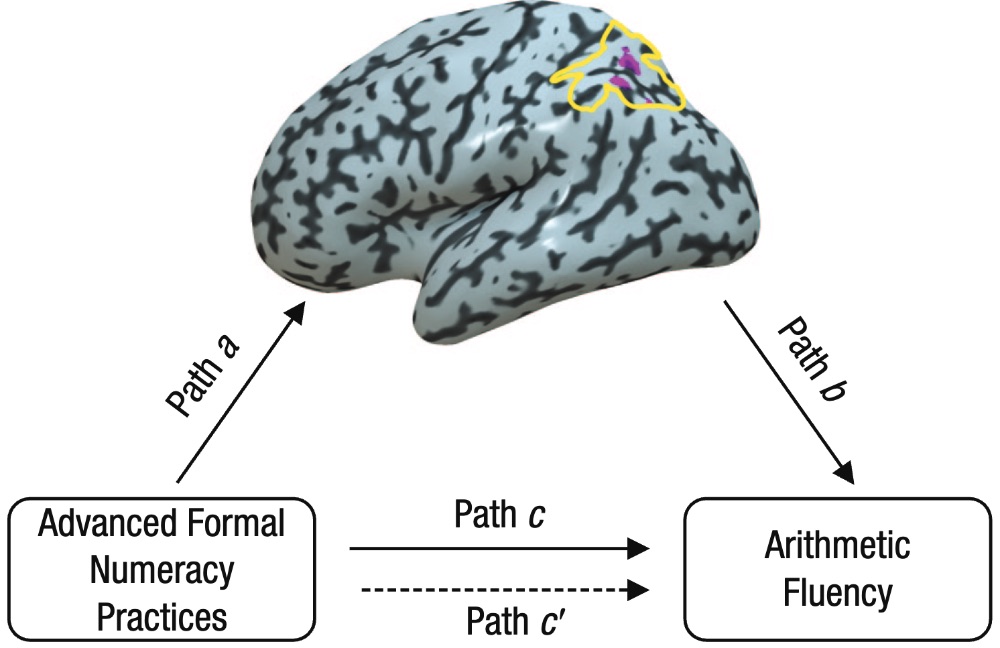
Becoming fluent in arithmetic is one of the central achievements of primary school. Our work suggests that this fluency does not only depend on memorizing facts, but also on the progressive automatization of counting procedures. We use both behavioral paradigms and neuroimaging to track how these mechanisms change over development.
Some related papers: Prado & Thevenot (2026) · Mathieu et al. (2016)
What are the cognitive and neural bases of reasoning?
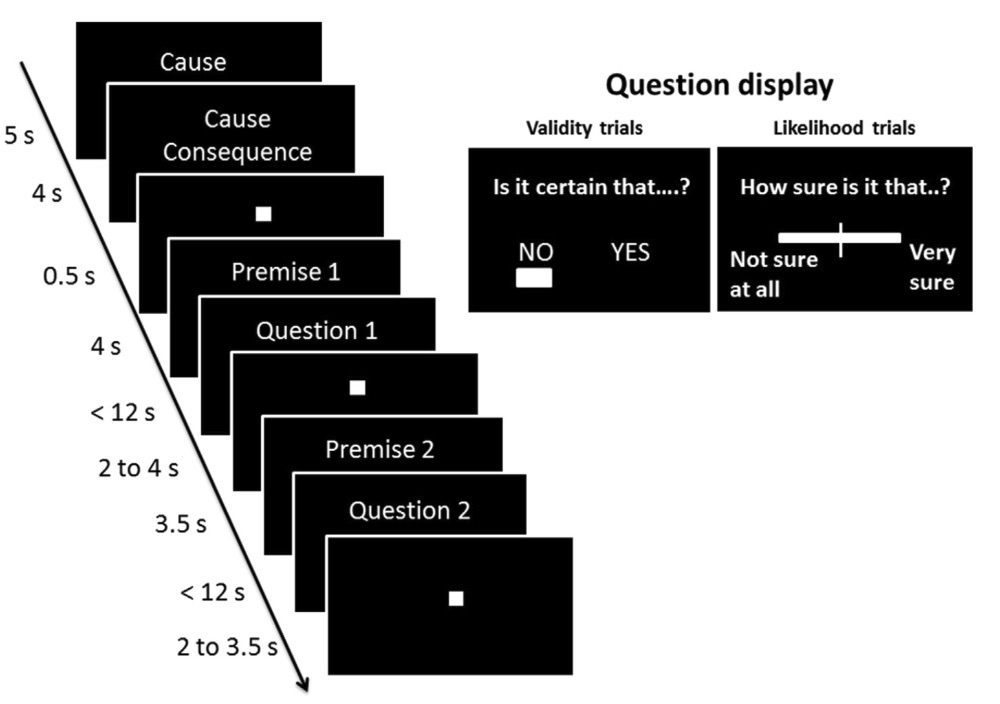
How can we conclude that Moscow is north of New York, from the premises that Moscow is north of Paris and Paris is north of New York? Several of our projects explore the mechanisms underlying such deductions, how they develop in children, and how they relate to learning mathematics.
Some related papers: Prado et al. (2011) · Schwartz et al. (2017)
Why do some children struggle with mathematics?
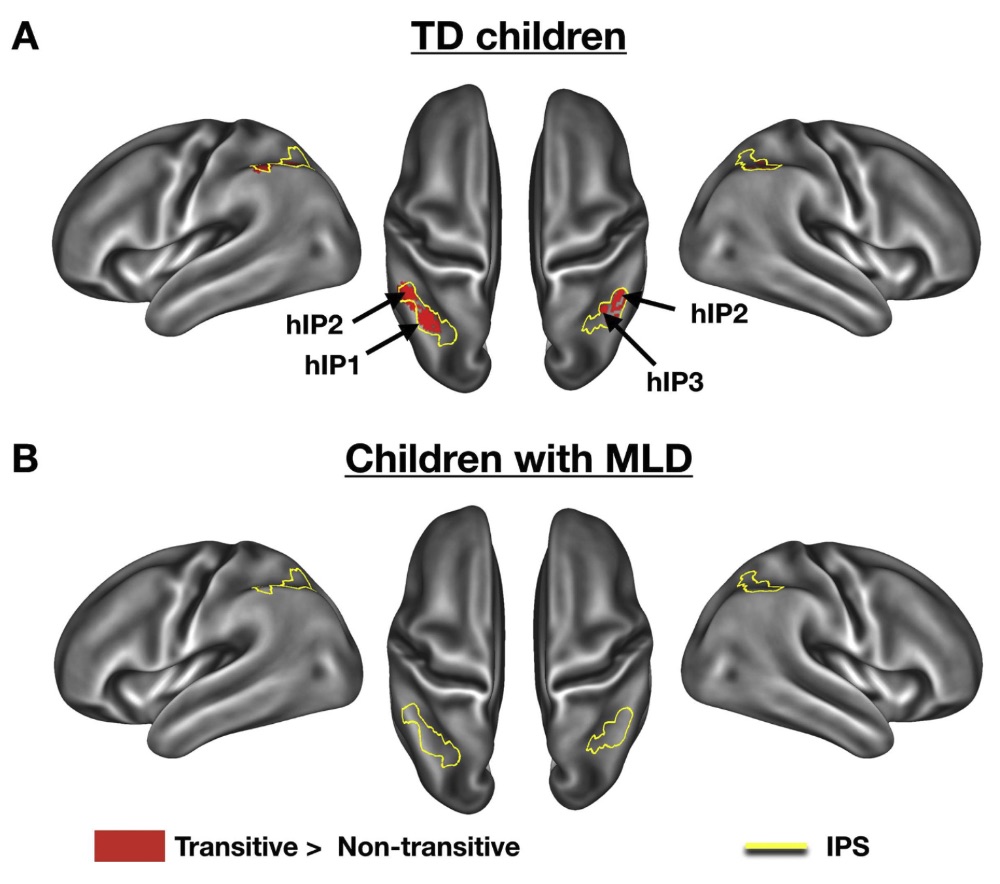
We study children with mathematical learning disabilities (dyscalculia) to better understand the sources of their difficulties. Our findings support a view of dyscalculia as a heterogeneous disorder, involving both domain-specific numerical processing and more general reasoning abilities.
Some related papers: Schwartz et al. (2018) · Berteletti et al. (2014)
How does the family environment shape learning?
Children differ enormously in the numeracy and literacy experiences they encounter at home. We investigate how these home learning environments relate to children's academic skills and to their brain responses, and how mathematical abilities are transmitted across generations.
Some related papers: Girard et al. (2022) · Constant-Varlet et al. (2025)
How can research inform the classroom?
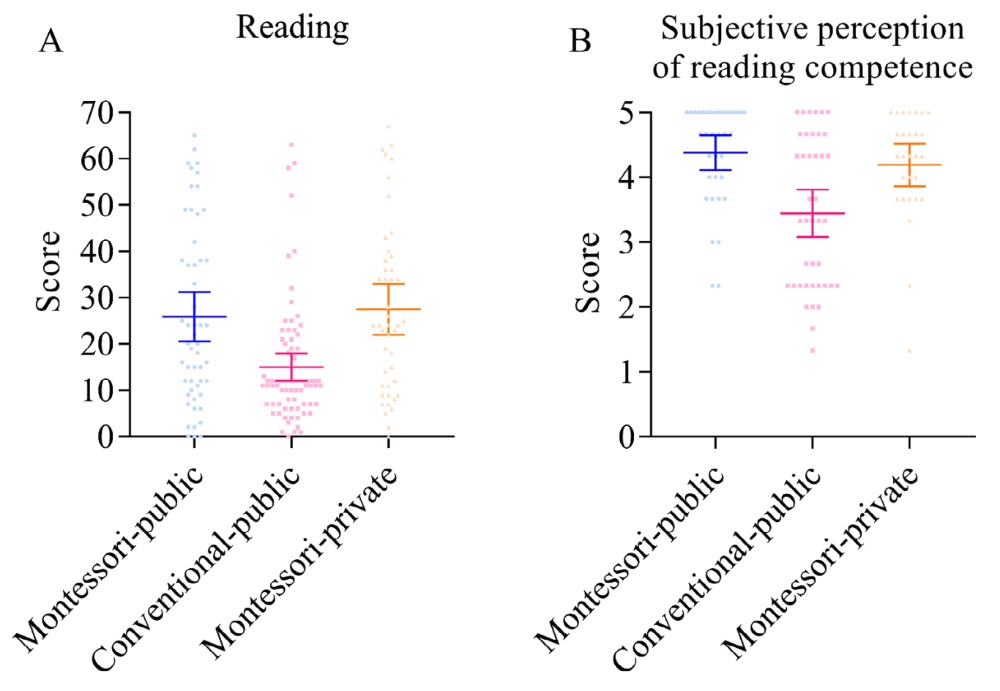
We work with math education researchers and teachers to evaluate educational approaches using rigorous methods, including pre-registered randomized controlled trials. Projects have examined Montessori education in the public preschool system, game-based interventions for learning fractions, and the automatization of arithmetic in early primary school.
Some related papers: Courtier et al. (2021) · Le Diagon et al. (2025)